Sea Routes & Blockades
What happens when one of the world's major sea routes is suddenly closed? Events surrounding the Strait of Hormuz show just how vulnerable the global economy can be. For months, this narrow strait between Iran and Oman has been at the centre of international attention. Will the passage be closed, remain open, or face a new blockade or even tolls? The conflict in the Middle East continues, increasing uncertainty for global trade and energy supplies. For anyone who has lost track of events, the Maritime Museum provides context to the news through two small exhibitions.
Where to see it?
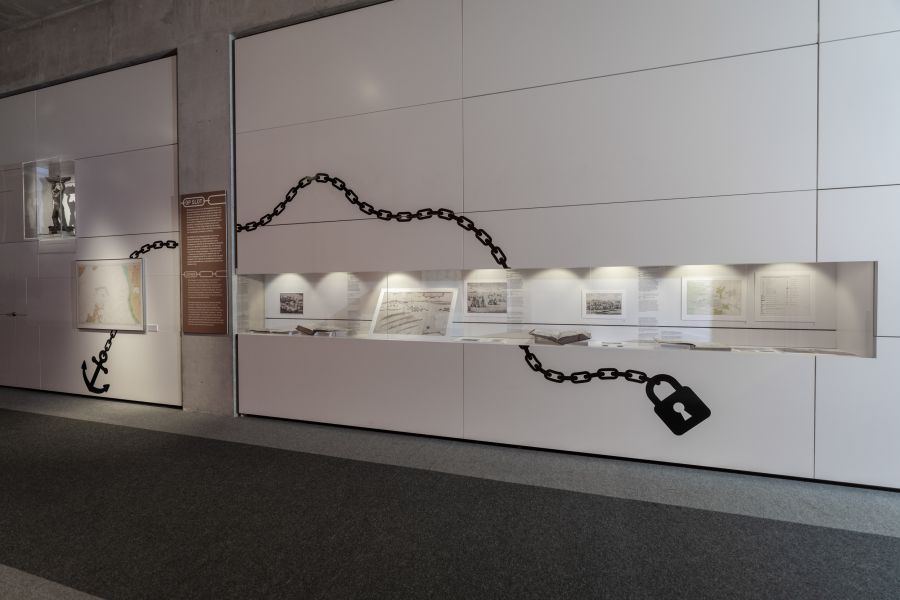
The presentation Straat van Hormuz. Kruispunt van handel en macht can be seen in the entrance area of the Offshore Experience. The presentation Op Slot, about historical naval blockades, can be found on Deck 2, opposite Maritime Women.
When?
Until 30 November 2026
In the entrance area of the Offshore Experience, which explores the search for energy at sea, the museum examines the current situation from a maritime perspective. The presentation Straat van Hormuz. Kruispunt van handel en macht highlights the strategic significance of this strait. The Strait of Hormuz is an essential link in the global energy supply. Before the blockade, around twenty per cent of global oil trade passed through this route. Anyone who closes or even threatens this passage puts pressure on the energy market and could trigger a new energy crisis.
The Strait of Hormuz is known as a maritime chokepoint, or knelpunt in Dutch. There are several such passages around the world. These chokepoints are crucial to international trade, but are also vulnerable to congestion, piracy and conflict. Blocking such chokepoints is therefore an important strategy in warfare and can take different forms. On Deck 2, the presentation Op Slot uses four historical examples to show that naval blockades have been taking place for centuries and that there are different ways of enforcing a blockade.
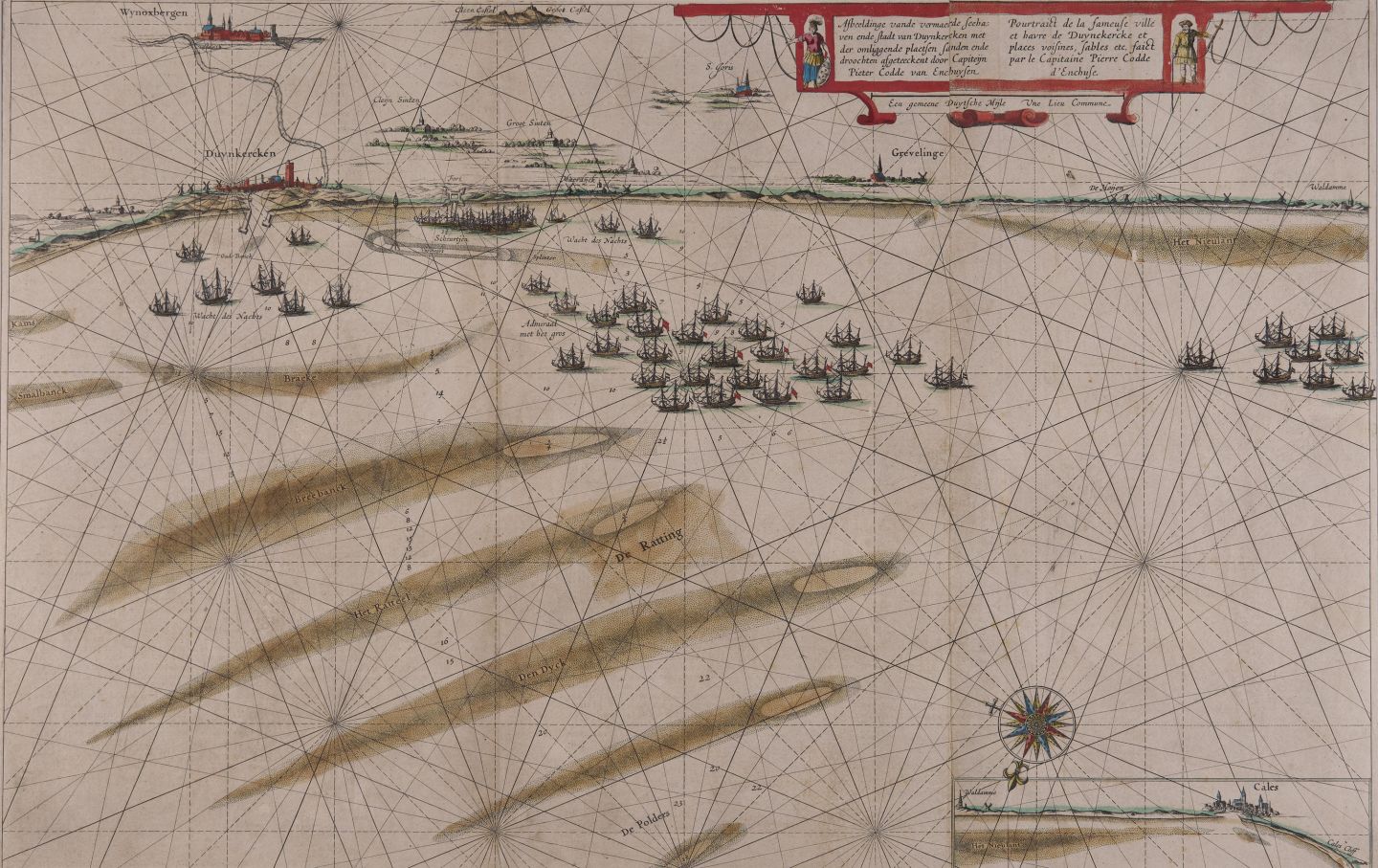
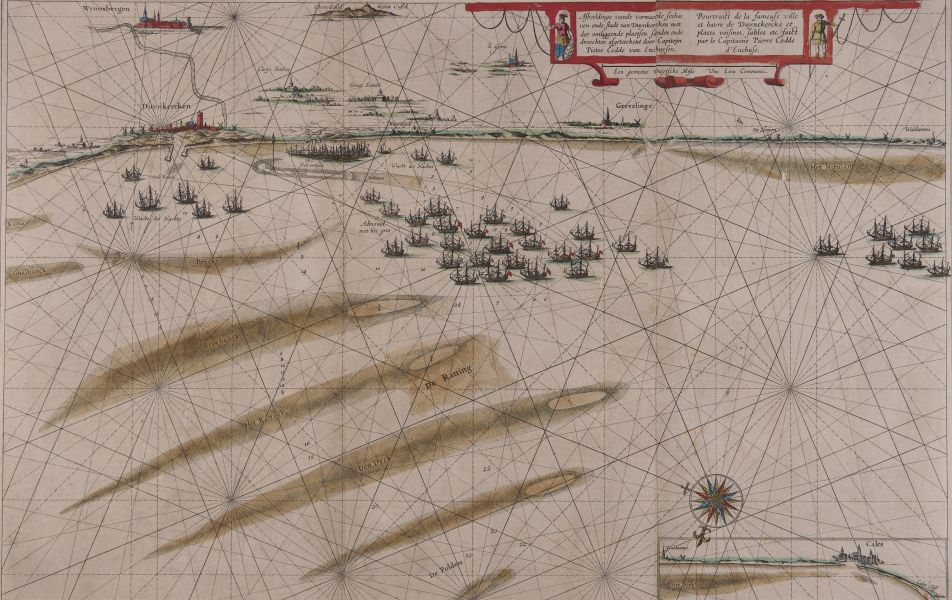 Kaart van de Vlaamse kust met schepen en de blokkadevloot, ca. 1631.
 Op Slot
 Kruispunt van handel